Showing posts with label WUSC. Show all posts

Thursday, 23 May 2013

Rue Sansregret: Full Circle

I attended a debriefing session for recently returned Uniterra volunteers in Montreal. It was an opportunity to discuss and share experiences and give program related feedback to the Uniterra team.

I was in the company of those who recently returned from placements in Sri Lanka, Vietnam, Bolivia, Peru, Senegal, Ghana, and Malawi.  I was the only one there who had been placed in Botswana. 

While we had a range of experiences, we agreed on one thing:  when you experience life in another country or culture, you do so on the tips of your toes -- making everything you see, do, hear, feel, and yes, even smell, that much more vivid and intense. 


I stayed, once again, at the gîte (bed and breakfast) down the street from Rue Sansregret -- the street (alley) I happened upon one mild November evening when I was in Montreal for my pre-orientation.  If you recall from my very first post, I noticed the sign when I was startled by a clown.  To me, it was more than a street sign. It was a sign that beckoned me to take a detour from my regular life to explore an unfamiliar territory.  Sometimes, when you reach life's crossroads, there is no parking allowed. Sometimes, you just have to choose one direction over another...
...without any regrets. 
I am so glad I took the path down  Rue Sansregret. 
Like the graffiti painted on the alley walls, it was a fun and colourful journey !

Wednesday, 13 March 2013

Motho Ke Motho Ka Botho

I will be presenting tomorrow to my colleagues in Health Canada on some of my learnings from my year volunteering in Botswana.  I did a trial run with my small work team last week, and am excited to share my experiences with a broader audience. 

There is a saying in Setswana, "Motho Ke Motho Ka Botho" that roughly means "you are what you are because of other people", and I want to acknowledge that I was able to experience all that I did in Botswana because of the people here who allowed me to do so, by granting me a leave and covering my workload.  This is my way of saying, "Look what I was able to learn and achieve because of your support"...and to demonstrate that I did more on my year away than have pool parties and go on safari -- haha !

I will be presenting again next week to the Edmonton Branch of the United Nations Association in Canada, and again in May, to the Health Canada Human Resources Team.  Each presentation gives me a chance to focus on a different angle of my work in Botswana.

I am curious to know what kinds of questions people will have !


Sunday, 3 February 2013

Marula Season

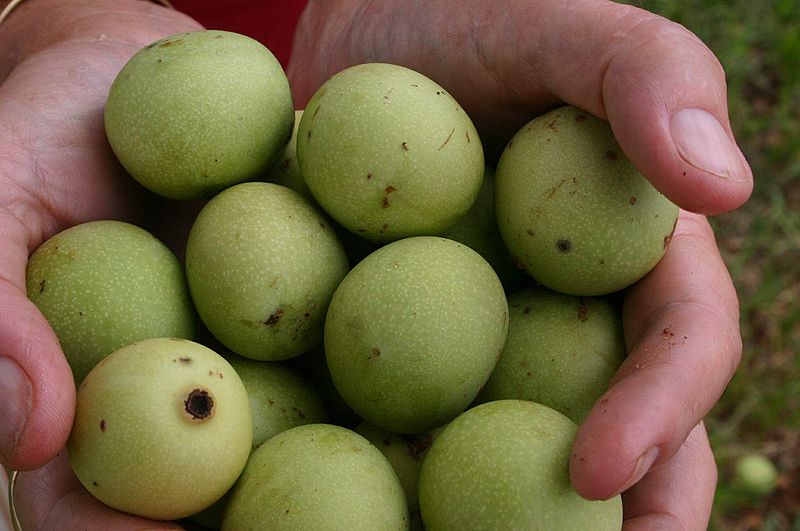
It is marula season.  They are ripening and falling off the trees in droves.  I was almost hit on the head on my morning walk to work today.  I have to step gingerly around then, to avoid slipping.  Occasionally, I will pick one up, break the skin, and suck the sweet/tart juicy pulp.  I don't see many people doing this, and am surprised that they are not scooped up and harvested.  The marula fruit is a great source of Vitamin C.  Each tiny fruit contains five times the amount of Vitamin C of a single orange!  They are also high in fibre, and can be dried, fermented, or cooked for jams or jellies.

One of our WUSC/Uniterra volunteers is working with a women's cooperative in Palapye to produce and market marula products  The folks in Gaborone, however, seem content to let them rot on the ground.  Maybe if I was here longer, I would learn from my friend in Palapye how to dry them or turn them into jam.

When I arrived here over a year ago, it was at the tail end of marula season -- and mango season.  I didn't know much about marula fruit then, but I knew I loved mangos, and I had the bright idea of making and canning mango chutney and salsa. However, by the time the idea occured to me, mangos were no longer in season. 

Again, if I were to stay longer, I would jump on the mango wagon and make some products to enjoy for future times.  I would also eat more watermelons when they are in season in April.  I love watermelons. Did you know that watermelons originate in the Kalahari Desert ? -- Botswana's sweet, juicy gift to the world !

I have learned that these wonderful treats come and go, and, like most of life's opportunities, you have to make the best use of them when they present themselves to you.  How many of life's opportunities do we let pass us by because we do not recognize how precious and fleeting they are or are not prepared to reap them when they are ripe ?

 
It takes a good year or more of living in a place to get a feel for the rhythm of the seasons. I feel I am just getting into the groove, so to say --- but now I have to get ready to adjust to an old, familiar beat, back in Edmonton.

I leave in just over a week....can you believe it ?  

Let's hope I remember to take the best advantage of Edmonton's seasonal offerings and any opportunites that come my way. 


Sunday, 2 December 2012

International AIDS Day, December 1, 2012

I attended the International AIDS Day event in Mogiditshane, outside Gaborone, yesterday. It was a rainy, blustery day, but the crowds, exhibitors, and entertainers showed up in full force.  With a national prevalence rate of 17.6%, it is estimated that 301,807 people are currently living with HIV in Botswana.  Events like this to share information and resources are part of a national awareness and prevention campaign.


Building an HIV Free Generation

Young girl, showing her support
Display at the WUSC booth


Even "Ex Toughmen" want to learn about the benefits of safe male circumcision

The HIV testing caravan behind the BOCAIP tent had a steady line of people wanting to know their status

BOCAIP banner
Pearl, the face of BOCAIP

The links between gender based violence and the spread of HIV are undeniable
Traditional dancers entertain the crowd


The President and other dignitaries show their support


Wednesday, 28 November 2012

One Hundred

This is post number 100 since I started this blog, nearly one year ago.  At this time last year, I had just returned home from my pre-orientation session in Montreal, where I stumbled upon Rue Sansregret, a dark mysterious alley with no clear end in sight.

I started the blog even before I formally accepted the volunteer opportunity.  I still had a lot of arrangements and consequences to consider.  I think, in some ways, the act of setting up the blog and stating my intentions to the world gave me the final push I needed.

In fact, the intention for this sabbatical was set in motion about 5 years earlier.  I was travelling through Kenya and Tanzania with my dear friend, Roxanne, and we both mused about returning to Africa to volunteer in public health or community development.  Roxanne asked when I might do so, and I said, "Maybe in five years, if I can arrange for a one year leave of absence from work."  I didn't think much about it, or do anything consciously to make it happen, until I happened upon a serenidipitous opportunity through WUSC / Uniterra.  And then I arrived here in Botswana, almost 5 years to the day of my prophetic pronouncement.  Roxanne's life path took a different but equally exciting course, and she has been a source of encouragement and support throughout my journey down this road.

In this past year, I have found 100 things to share with you, my friends and family.  100 events, experiences, musings, and observations that I found interesting enough to want to share. 

I wonder...at this time next year, once I have returned to Edmonton and settled into my regular routine, will I have found another 100 things of interest to share ?  I may have to look a bit harder or longer or differently at the familiar, but I think I am up to the challenge !

Monday, 15 October 2012

This is Why: Part I

Sometimes, it doesn't hurt to ask

"Donations requested for Ramotswa family"

This was the subject line of an e-mail message I sent to my network of friends and colleagues. (I have been here long enough now to have a network.)

I am not comfortable requesting donations, but I have come to learn that, sometimes, it doesn't hurt to ask.

Mma Kwape had been approached by a woman with family in Ramotswa who had just lost their home and all their household and personal belongings in a fire.

The family is headed by a young woman in her early-20's, herself, the single mother of a 6-year old boy, who has been looking after her younger brother and sister, in college and high school, respectively, since they became orphaned earlier in the year.

Child-headed families like this are an all too common occurance in Botswana today, where 17 out of every 100 children are orphans.

Their mother succumbed to an AIDS related illness.

She had worked hard, despite her advancing illness, to leave her children the security of a 3 bedroom house. 

Unfortunately, they didn't have insurance. They lost everything, except the clothes on their backs. 

The woman who approached Mma Kwape, the children's aunt, is not able to take them in.  They are temporarily staying with an uncle, but it is not a permanent solution.

The BOCAIP staff decided that we would check our cupboards and closets at home to see if there is anything we can donate to this family.

I decided to extend the call to my broader personal and professional network.

The response was swift and generous.

This morning, a donation came in from WUSC of gently used linens and bedding left behind by past volunteers. 

We also decided to call and write to the managers of the local grocery stores, to see if they have any left-over or near the end of shelf-life stock they can donate.  We have had positive and sympathetic responses, so far.  Mma Kwape has even been in touch with a local bank.

Our next step will be to approach businesses and embassies for support with rebuilding the house.

Sometimes, it doesn't hurt to ask.

This is Why

Upon further discussion with the children's aunt, Mma Kwape realized that they are in need of more than pots and pans, pasta and toothpaste.  They are also in dire need of psycho-social support.

They are dealing with issues of trauma, grief, and guilt (someone left a candle burning).  We also learned that the young girl in high school is HIV positive.  The prevention of mother-to-child transmission programs that are so successful today did not exist when she was born 18 years ago. 

BOCAIP is well positioned to connect this family with counsellors and social workers to help them work through these issues.  Our staff will visit them soon.  They will also make sure the young girl has the medical support she needs, and that the family gets the government services for which they may be eligible. 

Some folks way wonder why I decided to come here.  This is why -- to support civil society organizations like BOCAIP become sustainable, so they can continue to respond to situations like this, impacting families affected by HIV and AIDS.

This is why.


Wednesday, 16 May 2012

Leave for Change

I mentioned in my previous post that there are two new volunteers in town.  Gulnur and Renee are here for between 3-4 weeks on the WUSC/Uniterra Leave for Change program.  At home, they work for the University of British Columbia (UBC), who helps supplement their travel expenses so they can volunteer during their vacation time. Part of Gulner and Renee's responsibility to UBC is to keep their colleagues informed about their experiences.  Check out Gulnur Birol's UBC blog posts to learn about what she is doing for BOCAIP, the organization for whom I  work.  She is here to evaluate two different models BOCAIP uses for a program to provide psychosocial support to orphans and other vulnerable children and their caregivers (living in situations like Violet's family-- see previous post), to help BOCAIP determine which is the most effective and sustainable of the two models.  Part of her project involves interviewing project staff, clients, and stakeholders in the different communities where the program is run.  I haven't yet had an opportunity to see BOCAIP in action in its different sites, so I am learning vicariously through Gulnur's observations.  I think we both agree that BOCAIP is making a difference in the communities it serves.

Tuesday, 27 March 2012

Cake


I baked a cake.

Melissa, one of the WUSC/Uniterra field staff, and a valued support to me here, gave me the starter batter for a Herman Friendship Cake. If you have heard of that before, then you will know that it is yeast-based, and has to be fed every few days until it is ready for you to bake. I fed it sugar, milk, and flour at day 5, and once again, at day 10. I then took 3 cups from the mixture -- 2 to pass and 1 to keep -- and added my own special ingredients to the remaining mixture. The recipe called for bananas and coconut. I didn't have bananas and coconut, so I substituted pineapple and chopped nuts.

I shared the cake with my housemates and work colleagues -- it would have been a waste to have kept it all to myself. I then passed on the 2 portions of batter to Rebeccah and Bonolo from my office.

Friendship cake is a bit like knowledge and skills transfer. You are given the raw ingredients (information or a skill). You add to it, and nurture it, over time. If you don't, it becomes stagnant and dies. Then, you add your own flavorings (i.e., incorporate your own perspective and experiences), based on your resources at hand. You produce something that can be shared with others. Not only can you share the finished product, but you can also pass on the starter batter and recipe (i.e., techniques and tools) for others to adapt for their own purposes, and pass on, in turn.

One thing I like about WUSC/Uniterra's approach to capacity building is that there is an expectation that any training provided to us or our partner organizations is applied and shared. Not hoarded. Not set aside on the shelf. But shared with and passed on to others. Like Friendship Cake.

I know that may be a simplistic way to explain knowledge transfer and capacity building, but that's what I was thinking about, as I baked a cake.

Thursday, 8 March 2012

Why I am here -- The Maatla Project

I thought I should start writing a little bit about why I am actually here, and what I am doing for work -- lest you all start thinking I am only here for the safaris - ha!

Through my placement with WUSC/Uniterra, I am contributing to a Botswana/Canada/USA umbrella initiative called the Maatla Project. Maatla is the Setswana word for strength, and the goal of the project is to support civil society's response to the HIV and AIDS epidemic in Botswana through strengthening the organizational development capacity of 4 core national HIV and AIDS networks to provide prevention, care, and support services at the grassroots level through their member organizations and/or sites. I have been placed, or embedded, in one of the 4 partner networks as an organizational development capacity advisor.

I am so excited about the many layers and textures to this assignment, and hope to describe them all in due time (once I find a succinct way to do so) ! In the meantime, I will prepare a couple of short posts to give you an idea of the scope of the HIV and AIDS epidemic in Botswana, and what is being done to address it, particularly by the network with which I will be working for the next year.

Stay tuned !

Tuesday, 21 February 2012

Settling In


Traditional lunch with WUSC staff and fellow newly arrived volunteer. Yummy selection of oxtail stew or seswaa (pounded beef), served with morogo (stewed greens, tomatoes and onions) with peanut sauce and papa (cornmeal or sorghum mash).


The WUSC Field staff have been a wonderful support throughout my orientation process.


Thursday, 9 February 2012

What I can expect for my first week in Botswana

Saturday 18th Feb: Arrival,1510 hrs; Airport pick-up; Drop off at residence; Welcome dinner

Sunday 19th Feb: Shopping

Monday 20th Feb: Introduction to WUSC staff; Completion of forms and photocopying of important documents (insurance card, passport, contract e.t.c, Review orientation program, Out to police (certifying copies) and immigration for visa application; Safety and security (Places to avoid; Suspicious behavior; Going out at night; What to do in case of accident or theft, violence, etc); Overall WUSC Botswana programs; Organisational structure/roles and responsibilities; Presentation of emergency plan; Administrative procedures; Brief visit to BOCAIP

Tuesday 21st Feb: Discussion on context of the country; Values of the country: family, eating and religious etiquette, work, etc.; Customs and traditions: greetings, respect for authority, role of women, relationship with time, communications, physical contact, etc.; Daily life: poverty, clothing, travel, relationships with partners and domestic staff, photos, negotiating purchases, etc.; HIV and AIDS talk and adaptation in Botswana; Botswana craft; Contract review, understanding; Code of ethics (reading and signing); Uniterra norms and policies review; Visit to the museum

Wednesday 22nd Feb: Support/ Resources from WUSC; Sector funds; SPO /ODM; Sector meetings; Gender equality in Botswana; City tour – visit key places and learn public transport use (e.g. post office, movie theatre, restaurants, banks etc); Visit to Mokolodi (game drive)

Thursday 23rd Feb: Maatla program overview - Intro. to program & partners; Role of advisors; How advisor assign fits into CP; Monitoring and reporting (Mid-mandate reports, End of mandate reports, tripartite meetings, monthly team meetings); Introduction to BOCAIP; Briefing on BOCAIP, its mission, structure (roles and responsibilities), its programs; Administrative practices, working hours, etc.; Review mandate: expected results, activities; Roles and responsibilities of the 3 parties (BOCAIP, OCDM, SPO/ODM)

Friday 24th Feb: Visit health clinic for briefing on country specific health problems; Language lessons

Wednesday, 18 January 2012

Rue Sansregret

It was mid-November, and I was walking back to the Gîte (Bed and Breakfast) from the metro station in East Montreal. It was late and dark, and because I was in an unfamiliar place, my wits were extra sharp.

I was in Montreal for pre-orientation training through WUSC/Uniterra for a posting I was offered in Botswana. I had been wrestling with the decision to uproot my life of ease and comfort, and the routine and responsibilities that come with it, to explore the unknown.

I thought I’d let the “universe” know I was open to signs pointing to the course of action I should take. My senses honed in on sounds of footsteps running up the street, sirens echoing in the distance, and the odd shifts in light from the residential walk-ups.

About 10 minutes into my walk, a car pulled up beside me. It stopped, the driver’s door opened, and a box was placed on the top of the car. A mangy figure with wild hair and exaggerated features, barely discernable in the dark, then popped up beside the box. Without stopping, I slowed my pace and tried to focus in on this somewhat alarming character. “Bonne soirée, Madame !”, he said. “Bonsoir, Monsieur”, I replied, with a giggle, realizing that he was not a manacing being, but a clown, returning home from a gig.

Waving good-bye, I carried on a few steps, then noticed an oddly placed street sign at the entrance of a dark alley. I peered down the alley, lined with graffiti painted walls and garbage bins, with no apparent end in sight, and then up at the sign, which read “Rue Sansregret”.

When I asked the universe for a sign, I didn’t expect it to take me quite so literally.

What could I learn from this experience ? You help me decide:

a) that if you choose to travel down an unknown path, you should do so fully committed and without regret.
b) that what may seem strange and scary at first encounter, could, upon closer inspection, be something fairly harmless.
c) that what you choose to see as signs, and how you choose to intrepret them, are true indications of your inner desires.
d) all of the above.
e) other.